As featured in New York Magazine (online here) and the Daily Mail (online here.)


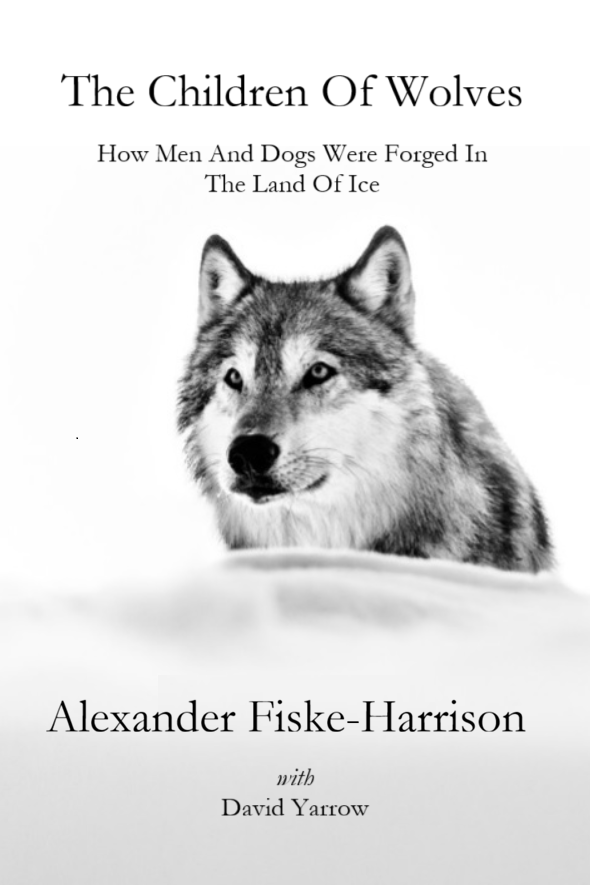
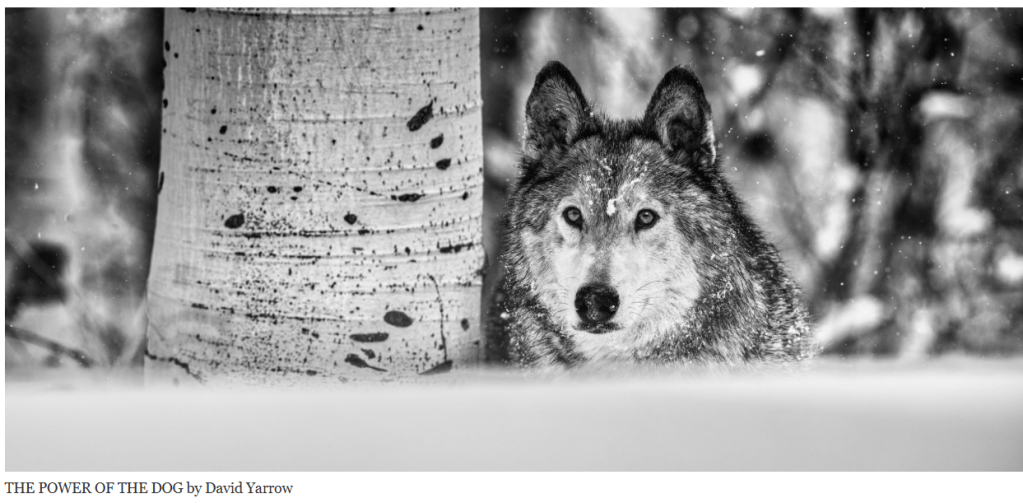
The Children Of Wolves: How Men And Dogs Were Forged In The Land Of Ice is the new forthcoming book from award-winning author Alexander Fiske-Harrison with images by the internationally acclaimed fine art photographer of the wild, David Yarrow.

“This was not just the first ‘domestication event’ as it is usually described. This was nothing less than the redefinition of humanity’s relationship with Nature itself in order to survive, and the forging of a deal that left both parties forever changed.”
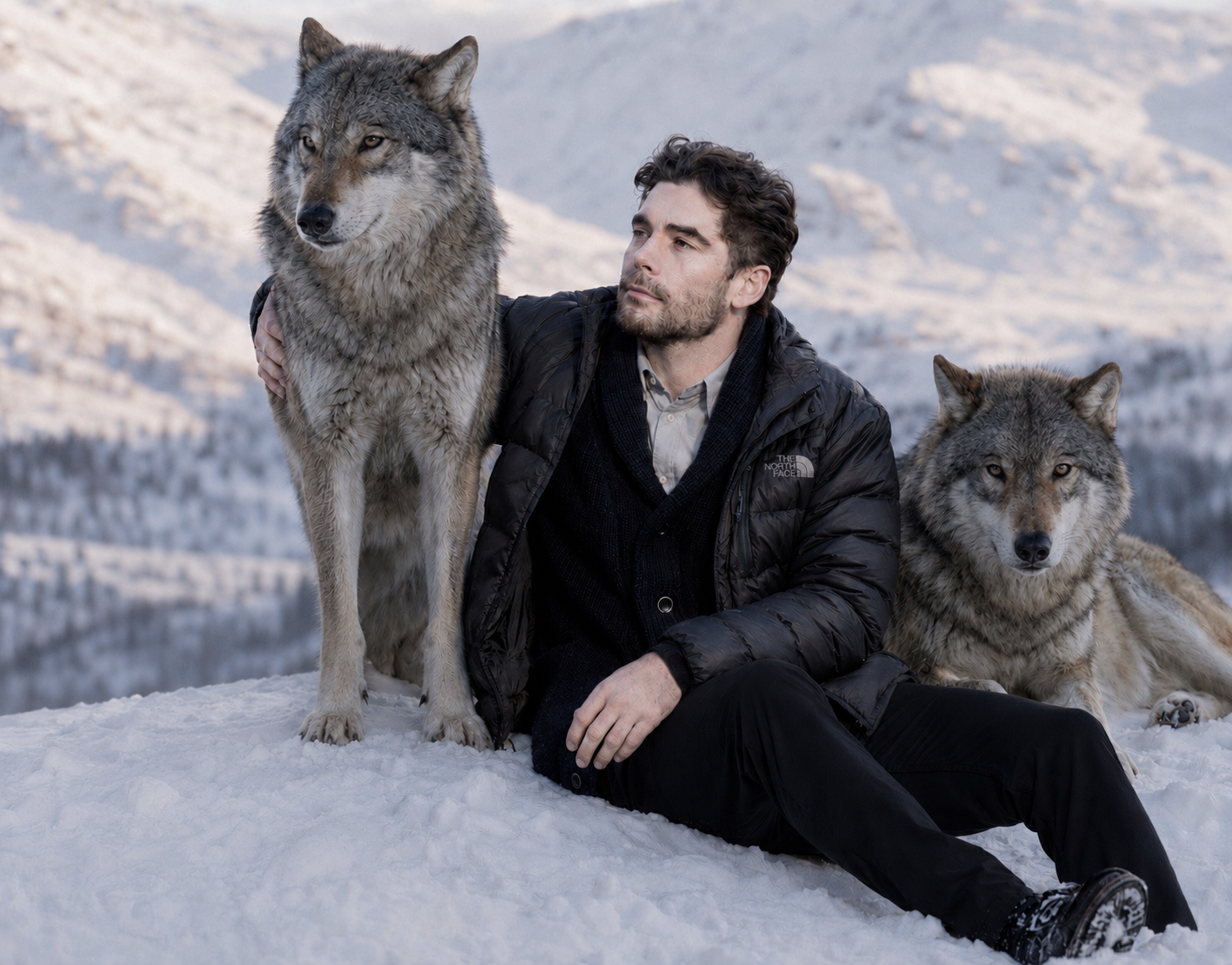
Alexander Fiske-Harrison

Fiske-Harrison is three-time finalist for Le Prix Hemingway International in France, was shortlisted for the William Hill Sports Book of the Year – ‘the Bookie Prize’ – and won the Oxford New Writing Prize.

Yarrow is a British fine-art photographer, conservationist, philanthropist and author. The subjects of his photography include sport stars, world-renowned models, wildlife, indigenous communities and landscapes. He has collaborated with super models Cara Delevingne and Cindy Crawford and by 2018 Yarrow’s work had raised over $20m for philanthropic and conservation organisations. 

(Fiske-Harrison & Yarrow worked previously together in Spain on the photographs of the most famous Spanish fighting bulls in the world, those of the Miura family, after whom the Lamborghinis are named, where Alexander broke his ankle attempting to get David his shot but no other animals were harmed. The photo of the two of them is by their friend and photographer Richard Dunwoody, three time British champion jockey and two time Grand National winner.)


THE BOOK


For Kela

Rest in Peace: 24 December 2009 – 9 September 2024

Professional polo player and horse breeder, Klarina Pichler and our then Belgian-German Shepherd cross, Kela (Photo: Alexander Fiske-Harrison 2020)

“There lay the dog Argos. Then, when he noticed Odysseus near, he wagged his tail and both his ears drooped, but he could no longer move towards his master to approach him; however, seeing him from afar, he wiped away a tear… And then death took Argos as his fate, immediately after seeing Odysseus in the twentieth year.”   The Odyssey, Book 17, Homer, c.750 BC

Kela (Photo: Alexander Fiske-Harrison 2024)


PROLOGUE

Chauvet Cave, Auvergne-Rhône-Alpes, South-East France, 24,000 B.C.


Looking at the footprints, I believe it was a girl. The low heel width-to-length ratio and heavier indentation on the inside of the foot – pelvic tilt, angle of knee – are not definitive but let us reconstruct this in accordance with the data, not against: she was a she. At 21cm long, she was about 9-years-old. Let us name her, nodding to Proto-Indo-European, “*Klā”, ‘the one who calls’.[1] For her we have twenty clear prints, right foot and left, starkly imprinted in clay for a seventy-metre track. Next to her, walking parallel through a narrow passage but never once crossing paths, are the pad marks of a lone wolf. The wolf’s pawprints are 11cm long. So, given *Klā would be around 130cm tall, the she-wolf’s head raised would be at her shoulder at a metre, its weight about 35kg to her 25kg.


This image makes no sense. The presence of the packless wolf least of all. In open country a lone wolf’s motive are clear—hunting or denning, social contact or evasion. A deep cave like Chauvet eliminates prey and predator cues and light. Wolves do not den in deep caves; they use shallow rock shelters or burrows with quick access to the outside. Curiosity alone is an inadequate driver against that risk: in true darkness enhanced vision is useless, echo geometry is disorienting, humidity saturates scent gradients, and the ground is uncertain. Absent light, a solitary wolf should balk long before the depth of those prints. It should have turned back. And there is not a single print of one wanderer superimposed on the other, which is practically impossible in the confined spaces unless they walked together at the same time.

The wolf was walking beside the human holding a torch aloft. Whether it was a true wild wolf or had been selectively bred for a few generations – within three or four generations tails begin to wag and humans to be sought out[2] – we do not know. It is not inconceivable that *Klā had helped raise a wild cub[3] whose mother had been killed. Or perhaps a she-wolf tamed by the tribe had learned to view *Klā as a sibling or a surrogate child and let her handle her young. Either way, unless *Klā was ceaselessly and affectionately interacting with the cub before it was three weeks old, when fear of anything new or alien sets in, then a bond this strong would never have formed. For this was no dog, that pawprint is that of a cave wolf[4] and, on balance, a female. Let us name her in the same language as her mistress, “*Ḱel”, meaning simply ‘shadow’.[6]

*                      *                      *

*Klā’s people, the Gravettians,[7] were the culture which them dominated from Spain to Siberia. They wore clothing and shoes of hide and leather, stitched with eyed-needles, cut from the animals they hunted – reindeer, bison, horse – with flint blades mounted on antler and bone. They were the culture born of the glacial incursion, of the ice that came south, killing almost all in its path. It forced humans into shelter points, the great refugia, the largest of which was the Franco-Cantabrian in which Chauvet sits. It spanned from northern Spain across southern France, an area of 200,000 square miles – the size of Great Britain – and contained half of all the humans left alive in Europe. They may have numbered as few as 2,000. The Gravettians of that time lived among the remains of a more ancient culture, 10,000 years older. The Aurignacians were the first modern humans to enter Europe, displacing our older cousin-species the Neanderthals. The Aurignacians painted the caves across that land of refuge, leaving art to descendants who had forgotten how to make it for themselves. It is no coincidence that the great paleolithic stone exhibition caverns span the Franco-Cantabrian refugium – Altamira, El Castillo, Lascaux and Chauvet. Chauvet sits in the valley of the Ardèche, a tributary of the Rhône, in the limestone foothills of the Massif Central looking towards the Alps. Today, it is a warm, Mediterranean gorge: steep white stone walls, holm-oak and pine on the rims, a single clear river meandering beneath the natural arch. Summers are dry, winters mild; the canyon is green. The animals are deer, boar and fox. In the air occasional eagles and vultures circle, more commonly swifts and swallows wheel against the cliffs and kingfishers flit along the river.

In the last Ice Age it was open, cold and harsh: winters long, winds hard off the plateau. The slopes were treeless steppe-tundra covered with grasses, dotted with stunted pine. Across the terraces crossed herds—reindeer, horse, bison—moving under watch of wolves, hyenas and the great cave lions that weighed almost twice as much as their modern Savannah cousins. The birds were mainly raptors, bleak cries in the air, devoid of song. Gravettian bands of twenty or forty souls camped tight to the rock for shelter from wind and safety against beasts: stitched hide shelters and cloaks, resinous pine and juniper smoke from the defensive fires laid between them and the night and its hunters. Where they notably did not camp was in the black mouth of the great cave, ten metres wide and five metres high, as they did with other caves. There is no sign there of knapped flint and butchered bone, the most common daily detritus of palaeolithic life. Perhaps the avoidance of that cave began when the giant bears took up residence. Cave bears, at half a ton, were twice the size of a large grizzly. However, by the time of *Klā they had been gone for 3,000 years. The Gravettians had language but no writing, and oral traditions last long, but not that long.[8] That said, the cave bears did not leave without trace. As many as fifty of the giant beasts denned in there each winter in the main chamber – thirty metres across, fifteen metres high – and its subsidiary side chambers for millennia.

However, it was most likely not just stories, nor bones and the hibernation hollows of bears that kept the humans out. *Klā’s people did not know about their Aurignacian predecessors of ten millennia before and had lost their representational skills and craft. The cave with the souls of beasts on the walls would have been a place both sacred and forbidden. It seems, though, that the young then had the same transgressive curiosity as today,[9] and with *Ḱel by her side, *Klā was made more brave. We know she took one of the pine wood branches her people used, the wood a natural wick for the turpene-rich resin and made a torch as thick at least as long as her eight-year-old arm: enough to light their path for an hour as long as you remember to tap the ash off on the cave wall, as the marks there today attest. The burning pine resin would have been the only scent as she walked into the cave. The temperature within on anything but than summer’s day would have been warmer than outside, a constant ten degrees Celsius. However, the limestone karst would have dripped with water, the air itself wet. *Klā most likely took off her shoes to preserve the untreated hide and sinew stitches from water and mud. She entered in bare feet on the mixed stone and clay ground, torch held aloft, with her lupine-canine companion beside her. In the entrance chamber, there were a few markings on the walls: dots and stencilled outlines of hands made from blowing pigment over them against the stone. It is the most primitive form of art, one even the Neanderthal’s could make. Then, in the first great hall, among the abstract marks and anatomical negatives, a few animal outlines painted in simple red ochre outline, perhaps still too abstract for a child who has never seen two-dimensional art. It would have been as she walked further into the second chamber that the world changed. With the flickering torchlight bringing them to life, she would have seen things she could perceive but not comprehend the nature of: red panels of horses, lions and rhinoceroses.

In this hall are also the greatest concentration of bear nests, three hundred of them, their claw marks deep gouges all over the walls. The bones of thousands of generations of them litter the ground, and their images decorate the walls. Modern hunter gatherer societies venerate the bear and refer to those savage giants that can shamble on two legs as the Old One, the Brother, the Ancestor. Perhaps they believed the bears had dug the cave into the cliff face with those 10cm claws. Perhaps they believed they had even painted the walls themselves. Or *Klā’s people could equally have believed the cave itself had grown the paintings by some unknown force that captured the spirit of the creatures of the steppes in stone. Here, she would have looked on paintings conceived of as magical by a people who had long forgotten how to make images at all, in a chamber littered with the remnants and remains of the most dangerous of the Pleistocene megafauna. However, *Klā had the one thing no one had had before her: she had her wolf, who knew there was no threat here at all. His mistress’s tension would have made *Ḱel vigilant, but the wolf’s extraordinary senses would have calmed them both. His hearing was vastly more attuned than *Klā’s, covering a frequency range four times as wide. *Ḱel’s vision, although inferior in appreciating the wonders of colour, was far more attuned to contrast and movement. And her golden eyes reflected twice as much light back through its retina, piercing all but the darkest shadows. However, it was her olfactory sense that dominated, forty times more powerful than her mistress’s, connected directly to the neural centres of threat appraisal, emotion and memory. Wolves don’t ‘smell’, they are immersed in a world of scent, both past and present. This is what we humans can never understand, because light does not linger like scent, it does not inform us of where it has been. Which is why, with the cave bears flesh rotted and marrow decayed to dust over the centuries, this sentinel-predator detected neither life nor the memory of life. Undistracted by art or religion, fearless of both death and ghosts, *Ḱel lived only in the real, the world of the ice, where her senses and strengths kept those he loved alive. And this she did, when full grown, with 35 kg of muscle moving at 60kph, with 42 teeth led by 3.5cm dagger-canines, and driven by a bite of a quarter-ton of force.

Not the fire’s warmth nor the wheel’s speed, nor the horse’s strength – and nothing mechanical since – has so augmented the fundamental existence of Man as the wolf, first tamed and later domesticated into the dog.[10] When it comes to the basic needs for human survival of food and protection, nothing in our entire history comes close to partnering with Canis lupus. And she loves us, our shadow.

In the final chamber, a half-kilometre into the rock, the walls become thick with image: lions hunting bison and mating, rhinoceroses fighting, the great five-ton mammoths with tusks recurved on to themselves, and the sacred prey species of reindeer and horse, bison and ibex. Here the later Aurignacians showed the zenith of their art, not just in the diversity of species, but in the mode and manner of their depiction. In places the walls were prepared by scraping back to fresh limestone canvas, and then lines engraved into it with flint to give actual depth. Here the outlines of red ochre are replaced with overlapping lines and graded shading of charcoal from burnt pine and black oxide of manganese. In this chamber the animals would have truly come to life, moving with one another in the flickering flame, in herds and groups, interacting and enticing the viewer to interact: a proto-cinematic effect, torchlight animating the walls into a zoetrope. These were the frescoes on the walls of a cathedral capturing the spirits of the natural gods. Which is why in the middle of this last chamber, the cramped space of the Holy of Holies, there is the head of the ancestor placed on a limestone plinth, the skull of the cave bear.

*Klā’s people’s only creations were small statuettes of fertility, ‘Venus figurines’, to carry with them as their numbers dwindled before the growing ice. They had learned how to haft the knife and back its blade and eye a needle but also forgotten how to make a bone-flute. Music, like painting, was gone from them. Instead, they had learned how to stitch furs to keep them warmer as the cold came and how to hunt within it. These were survivors, who had forgotten how to dream upon walls, but what walked with them in waking life is why we are alive today.

[1] A 19th century linguistic project, Proto-Indo-European is a scholarly reconstruction of what is believed to be common root language of all modern languages in this part of the world. Why not use the oldest reconstructed language to reconstruct of the oldest recorded canine-human interaction. It is the purported root of Celtic, Anglo-Saxon, Old Norse, Latin, Old German, Ancient Greek, Old Persian, Sanskrit, Old Slavic and many others. [2] Following Soviet scientist Dmitri Beliaev’s 1950s work with foxes. [3] The massive complications of this are discussed later. [4] Canis lupus spelaeus, a larger and more robust ancestral line of the modern grey wolf, Canis lupus lupus, and the dog, Canis lupus familiaris. All are the same species but distinct sub-species. [7] Named for La Gravette, like Chauvet in the South of France. [8] Although there are stories of the aboriginal peoples of Australia maintaining stories for as much as ten millennia, these tend to be of the form: that lake was caused by two gods mating, causing a fire from heaven. Then keen academics point out the volcanic origin 7,500 years before and claim continuity, rather than, for example, archetypical origin stories such as Carl Jung might have advocated. All we can know is that Homer’s epic poems lasted for four centuries before being written down, and the last version told by a speculative travelling bard on an Ithaca hillside tavern, who learned from mouth to ear, not hand to eye, was at most a thousand years after the Siege of Troy. [9] The only distinguishable footprint set at Lascaux is similarly of a 12-year-old child. [10] In brute terms, the canine is an independently functioning but needs-attuned hybrid surveillance-and-weapons system beyond any Artificial Intelligence-guided drone. This is why one in ten of the US military’s 1,500 dogs are in Special Forces, compared to one in sixty-five for human soldiers.


PRESS

DAILY MAIL
22 November 2025
The smart set’s talking about… Daredevil relights old flame after parting from polo star
Once hailed as ‘the most bad-ass Old Etonian ever’, daredevil author Alexander Fiske-Harrison has taken fright at matrimony.
I hear that the [Belgravia]-born former bullfighter has ended his engagement to top Austrian polo player Klarina Pichler and rekindled a romance that began in the quads of Oxford University.
‘I can confirm that Klarina and I parted ways at the beginning of this year, with great sadness and mutual respect,’ Xander tells me. ‘I have finally washed the blood [of bullfighting] from my hands and pivoted back to my original role [as conservation biologist], from my time at Oxford.’
He is now going out with a girlfriend from his university days, the French film actress Camille Natta, 48.
‘Next week, we set off, reunited like Odysseus and Penelope,’ says Xander, who’s writing a book with Camille [as photographer, The Children Of Wolves: How Dogs and Humans Were Forged In The Land Of Ice, alongside the great David Yarrow.]
He previously went out with Lord Brocket’s model daughter, Antalya Nall-Cain,[and in 2011, and later married Alexander, Prince of Prussia .]

 
Author’s Note:
The
Daily Mail may have exagerated my words, their meaning and my intent somewhat – Camille is still married to her husband and returned to him in October and left the book project, having joined sometime in August when the New York Magazine article beneath appeared, without having contributed any work. 

NEW YORK MAGAZINE: VULTURE – “I excuse myself to use the restroom. When I return, Winters is deep in conversation with the man sitting next to us: a British writer named Alexander Fiske-Harrison, who is working on a book about wolves (The Children Of Wolves.) On the walk up, we had started talking about relationships. There were a couple of times that Winters had come close to settling down, but it had never happened. It was no one’s fault, he said. He supposed it was never too late to have children, but he didn’t really want to be a 70-year-old dude with a little kid.
Now, a fuller story emerges. One of Winters’s exes had remained in his life, but they’d had a falling-out. He despaired of ever seeing her again. Outside the bar, Alexander presses him: “Did you do the full back-down? There are two ways to apologize. One way is, ‘I’m really sorry if what I did offended you.’ And the other way is, ‘I’m very sorry.’” Among the men around him, opinions vary on what Winters should do. Alexander shares his own tale of romantic turmoil [see above]. Then for the next 15 minutes or so, Winters and I go silent as he entertains us with accounts of interviewing bullfighters in Spain.”

THE CHILDREN OF WOLVES is a journey through the intertwined history of wolves and humans — how the wolf became the dog, and how we became ourselves beside it. From the first footprints in a cave in France — a child walking among prehistoric painting in torchlight beside a wolf 26,000 years ago — to modern conservation battles, military kennels, animal rescue centres, and the wolf within your own home, this book traces how our imagination, culture and very survival have been shaped by the first animal that chose to walk with us. Each chapter alternates between wolf and dog, shadow and companion. Wolves appear in myth and in reality: Transylvania’s Carpathians, where Dracula’s forests meet Europe’s last great wilderness; Yellowstone, where reintroduction reshaped rivers and returned the natural balance; Norway, where the world-wolf Fenrir – who devoured Odin himself – has a legend that shadows an inbred, embattled lupine population; Russia, where wolves fed on battlefields and live in folklore as killers in the snow; the Pyrenees and Alps, where they return to pastoral conflict; and the high Arctic, where the largest white wolves live unafraid in pure wilderness. The dog chapters mirror them: the first burials of wolf-turned-dog in Germany and Israel; the Red Zone kennels of East Anglia where dogs are retrained to avoid euthanasia, where aggression is remediated; SAS working dogs in Hereford, trained as comrades-in-war, weapon-made-warrior; on to gentle companions who are therapy animals, search-and-rescue partners and family; the sentinel role of the dog’s brain and senses, augmenting human weakness; and finally the tool and the trophy, from obedience drills to Crufts and Imperial lapdogs in China suckled by the Emperor’s concubines. This is a book of science, history, and personal witness: the authors living with wild wolves and beloved dogs, riding out into forests and steppes, training with soldiers and handlers, reflecting through neuroscience and archaeology. It is ambitious in scope, spanning from the last Ice Age art to modern rewilding, but intimate in focus, rooted in lived encounters with wolves and dogs. Echoes in the Ice shows how no invention — not fire, nor wheel, nor horse, nor machine — shaped us more than our alliance with the wolf, and how that bond continues to define us to this day.

Contact lucy@mephistoproductions.co.uk


The author with Kela, in Spain not long before her death in 2024